For operations, supply chain and procurement leaders.
Experience across life sciences and complex manufacturing.
Opyflow turns complex operational change into measurable business value.
We lead operational turnarounds, supply chain and procurement transformation, complex programmes and applied AI, from diagnosis through implementation.
first-year savings for one client (~$5M)
capacity above the previous estimate (modelled)
$1M saved in validation batches, realised
lower logistics cost over a five-year contract (~$2M)
of clients returned for additional work
engagements since 2019
What changed for clients.
Global manufacturing turnaround
Realised result₪15M (~$5M) first-year savings · EBITDA up 10% · 12 months
Opyflow wrote the turnaround plan and carried it out: it led the operational restructuring, realigned the leadership team and ran the procurement optimisation.
The digital twin that deferred expansion and saved $1M
Realised result$1M saved in validation batches · Second construction phase deferred
Opyflow built a digital twin of the cell-therapy manufacturing process. It showed the capacity was already there: 30% above the previous estimate (modelled).
Global post-merger integration
Realised resultDay-1 on time · No operational delays · The quarter's sales delivered
Opyflow set up and ran the PMI office for a European parent and its Israeli team.
Backlog recovery, industrial technology
Realised resultAbout 40% fewer backorders · Up to 39% more daily output at critical steps · Quarterly revenue commitments supported
Opyflow stabilised planning and production starts, then built a daily and weekly cadence that removes one constraint at a time.
Sharp solutions, followed through.
We know it from the inside
Decades in senior operations, supply chain and procurement roles, at Teva, Stratasys, Medinol and Carmel Forge among others. We arrive recognising your business, not learning it on your budget.
We find the move that matters
Two or three moves that shift the number, practical enough for your team to own.
We raise the flag early
A tight PMO follows every commitment, and the moment something stops moving, you hear it from us first. Change programmes fail quietly. That is the failure we design against.
Start from the problem
- 01Costs keep rising. Margins aren't recovering.
- 02Orders are waiting. The plant isn't shipping enough.
- 03Cash is tied up in inventory. Customers still wait.
- 04Supply disruption is putting delivery and margin at risk.
- 05AI tools are in place. The operational gains aren't.
- 06The transformation is underway. The benefits are overdue.
Six ways we move the number.
Or by capability. Most engagements draw on two or three of them.
Operational excellence & turnaround
Stabilise performance, reset the cost base, reshape the footprint and rebuild management control.
Supply chain optimisation
Planning that decides: protect service, release cash, support growth.
Complex project delivery
Programmes restarted and integrations landed, with one owner and one date for every commitment.
Procurement excellence
Should-cost the categories that matter, negotiate from evidence.
Logistics & distribution
Warehouses, networks and lanes that hold their numbers: accuracy, service and cost together.
Applied AI in operations
AI taken from isolated pilots into everyday operational work, run by your team.
Ways to start
Two defined ways to begin.
- Operational diagnostic 2–4 weeks The critical path and a prioritised set of moves, each with its expected value, cost and owner. It ends in a decision. How it runs
- Applied intelligence sprint 3–6 weeks One high-value problem: cost, supply or demand. A working model of the problem your team keeps using, and a decision at the end. How it runs
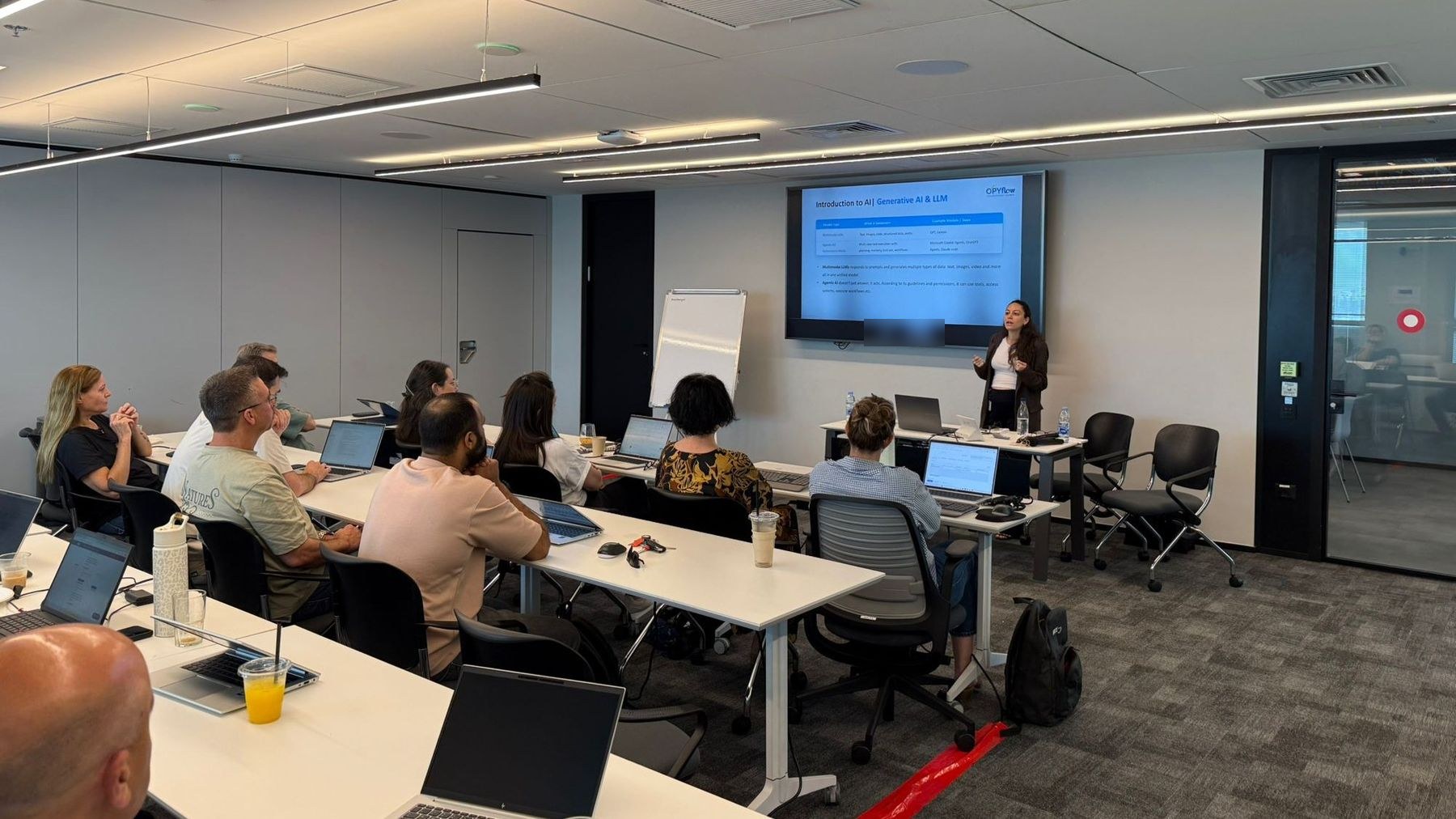
AI workshops
Put Microsoft Copilot to work.
Hands-on workshops for procurement and for sales & marketing teams, built on examples from the participants' own work. On-site: 5 hours · Virtual: 3 hours. Hebrew or English. An optional follow-up programme measures use in daily work four weeks later.
See the workshops →We are done when it's in the P&L.
Describe the situation to the senior person who would do the work. You don't need to prepare data for it, and if we are not the right firm, we will say so.